
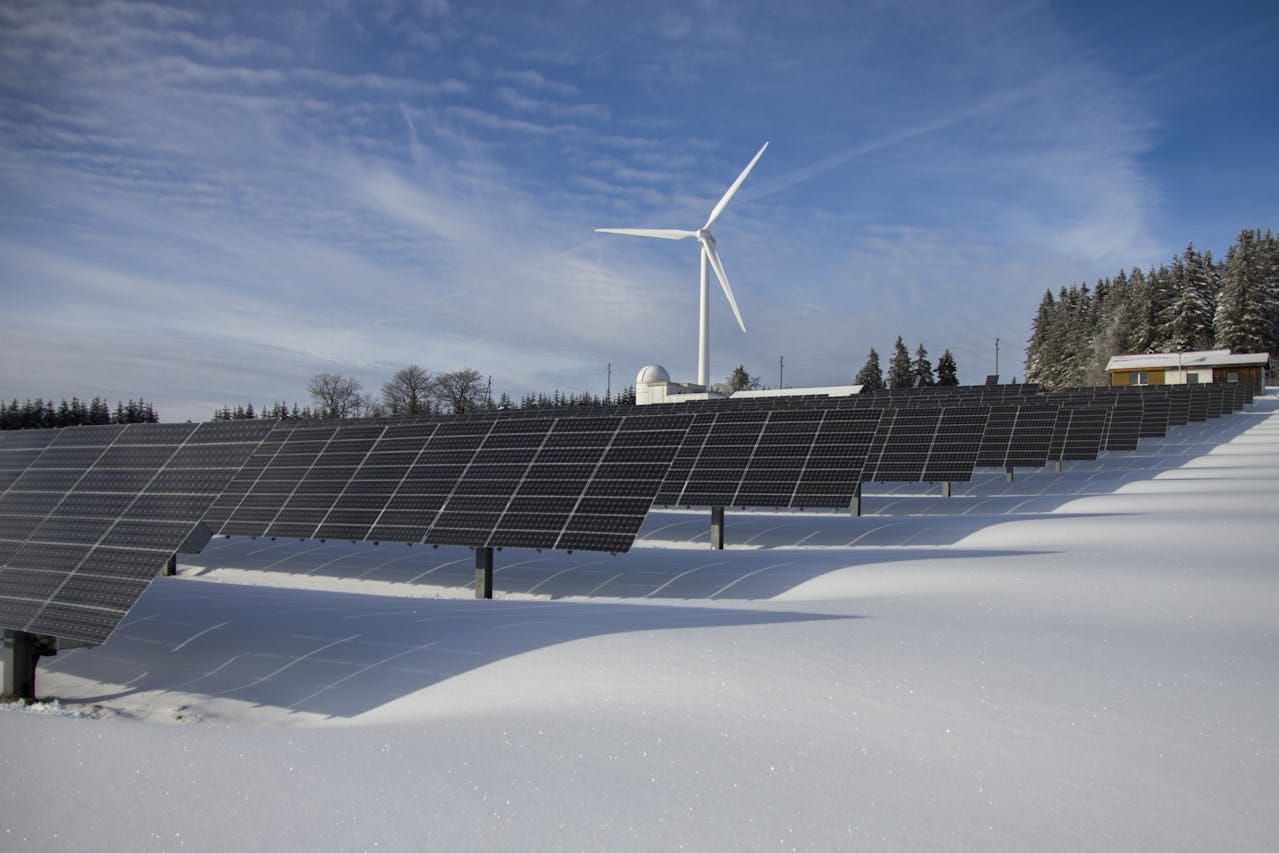
The One Big Beautiful Bill Act (OBBBA) which was adopted into law on 4 July 2025 increases or extends a variety of tax breaks for companies. The law also ends a number of clean energy tax incentives for businesses earlier than originally planned. For instance, the Qualified Commercial Clean Vehicle Credit (Section 45W) was originally scheduled to expire by 2032. According to the OBBBA, it’s only available for vehicles purchased before or on 30 September 2025. If you’re looking for other green energy breaks, companies are still able to benefit from the breaks if they act fast.
Deduction for energy-efficient building improvements
The deduction under Section 179D allows the owners of existing or new commercial structures to deduct right away the expense of specific energy-efficient improvements instead of depreciating them over the 39 year period which is typically the case. The OBBBA eliminates the Section 179D deduction on property that began construction after June 30, 2026.
Other than commercial building owners, taxpayers who are eligible are:
- Real estate investment trusts and tenants (REITs) who make qualified improvements, as well as
- Certain designers, like engineers and architects of government-owned buildings as well as buildings that are owned by tribal groups, religious organizations and non-profit schools or universities.
The Sec. 179D deduction can be used for new construction projects as also for additions or renovations to commercial structures regardless of size. (Multifamily rental homes with at least four stories higher than the grade are also eligible ) Eligible improvements include depreciable property installed as part of a building’s interior lighting system, HVAC and hot water systems, or the building envelope.
To qualify for the program, an improvement must be part of a program which is intended to reduce annual power and energy bills by at least 25% compared to industry standards applicable as verified through an engineer licensed by an independent contractor. Base deductions are calculated by using a sliding scale, which ranges in price from 50 cents per square foot when improvements result in 25% energy savings, to $1 per square foot of improvement which achieve 50% savings on energy.
Projects that satisfy specific prevailing wage and apprenticeship standards can be qualified to receive bonus deductions. The deductions are ranging between $2.50 per square foot for improvements that result in 25% energy savings, to $5 per square foot for upgrades which result in 50% savings in energy.
Other tax breaks for clean energy for companies
Here are a few additional clean energy breaks impacted with the OBBBA:
Alternative Fuel Vehicle Refueling Property Credit (Section 30C). The OBBBA credits are eliminated for properties placed into service following June 30 2026. (The credit was scheduled to expire in 2032.) Property that stores or dispensates fuel that is clean burning as well as recharge electric vehicle batteries is suitable. The credit can be worth up to $100,000 per item(each charging port or fuel dispenser, storage facility).
Clean Electricity Investment Credit (Section 48E) and Clean Electricity Production Credit (Section 45Y). The OBBBA removes tax credits for solar and wind installations that are in operation after 2027, unless the construction starts prior to or on July 4 2026. Solar and wind projects that begin after this date have to be in operation at the end of 2027.
Advanced Manufacturing Production Credit (Section 45X). According to the OBBBA, the wind energy elements won’t be eligible for the credit until 2027. The law also alters the credit in different ways. It includes, for instance “metallurgical coal” that is suitable for the production from steel into the listing of essential minerals. In the case of critical minerals other than metallurgical coal, the credit will be phased out between 2031 and 2033. For metallurgical coal, the credit will expire in 2029.
Make sure you act quickly
A lot of the clean energy benefits are ending years ahead of schedule and leaving little time for businesses to make decisions. If your company is considering green energy options, this is the right moment to think about taking the next step. We can help you determine whether you are eligible, take advantage of tax benefits and design projects to meet the applicable needs before time expires. Contact Parr & Ibarra CPA firm in Keller, TX now to discuss the actions you can do to maximize tax benefits when they’re accessible.

