
Most short-term rental income is taxable, but four rules decide exactly how: the 14-day exception, the average customer-use test, material participation or real estate professional status, and Form 1099-K reporting threshold. Before you file, count your rental days, calculate average guest stays, gather your platform payout statements, and check whether your city or county requires occupancy tax registration.
TL;DR:
- Renting your residence fewer than 15 days excludes income only if personal use reaches 14 days or 10% of rental days, whichever is greater.
- An average stay of 7 days or less avoids passive rental treatment; an average of 30 days or less does so only with significant personal services.
- Hosts need 500 hours or substantially all rental work to materially participate; real estate professionals need over half their work time and over 750 hours.
- Platforms issue a payment reporting form only when gross payments exceed $20,000 and transactions exceed 200, but hosts must report income regardless.
- Active hosts may deduct up to $25,000 in rental losses against other income if income qualifies, but at risk and passive loss limits apply first.
When is short-term rental income excluded? The 14-day (Masters) rule and personal use allocation
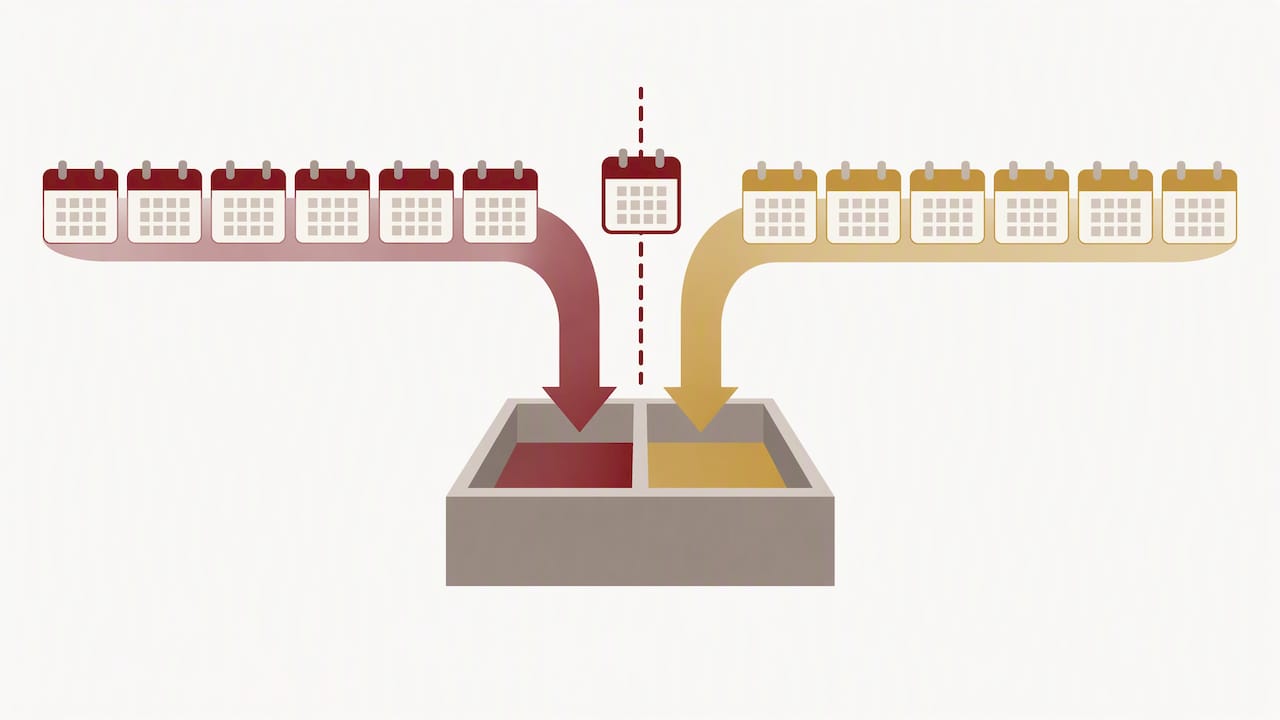
If you rent a dwelling you also use as a residence for fewer than 15 days in the year, you do not report that rental income, and you cannot deduct any rental expenses for that period, according to IRS guidance on renting residential and vacation property. This is often called the Masters rule, after the golf tournament that made it famous.
To use it, your personal use must equal or exceed the greater of 14 days or 10% of the days the home is rented at fair value.
- Rent your home for 10 days a year and use it personally for 20 days: the 14-day exception applies, and that rental income is tax-free.
- Rent for 60 days and use it personally for only 5 days: you fail the personal-use test and must report all rental income and expenses.
- Renting to family at a discounted rate generally counts as personal use days, not rental days, unless it is rented at fair market value.
Converting a home you previously lived in full time into a short-term rental, or owning a property jointly with others, changes how these day counts get split. Our guide to the three IRS rules that decide short-term rental taxes walks through more scenarios.
Average period of customer use: the 7-day and 30-day tests and when rentals act like a business
Once you cross the 14-day threshold, the next question is how long your average guest stays. You calculate this by dividing total rental days for the year by the number of separate bookings, a formula laid out in IRS Publication 925 on passive activity and at-risk rules.
- If guests stay an average of 7 days or less, the activity is not treated as a rental for passive-activity purposes at all, even though the income is still taxable.
- If the average stay is 30 days or less and you provide significant personal services (daily housekeeping, meals, or concierge-style arrangements), the activity is also excluded from rental treatment.
- Routine turnover cleaning, basic linen service, or trash pickup between guests does not count as a significant personal service; these are standard rental maintenance tasks.
This classification matters because activities that fail the rental-use tests may be treated as a trade or business instead of a passive rental, which changes how losses and self-employment tax apply.
Material participation and the real estate professional test: why most hosts remain passive
Most hosts remain passive investors for tax purposes, even if they personally answer every guest message. Publication 925 lists several material participation tests, including working 500 hours or more in the activity during the year, or doing substantially all the work yourself with no other significant participant. Simply approving bookings or coordinating a cleaner usually does not meet these bars.
The real estate professional test is a higher standard: you must spend more than half of your total working time and more than 750 hours a year in real property trades or businesses in which you materially participate, per Publication 925.
- Track hours in a dated log, not a rough estimate at tax time.
- Group multiple rental properties together under the election allowed by the IRS if that helps meet the hours threshold.
- Keep calendars, texts, and booking platform messages as backup evidence.
Pro Tip: Screenshot your hosting dashboard monthly; platform data disappears or resets more often than you’d expect.
Our piece on the short-term rental tax loophole breaks down common misreadings of these tests.
Income reporting and Form 1099-K: platforms, thresholds, and your reporting duty
Rental platforms only issue a Form 1099-K when a host’s gross payments exceed $20,000 and the number of transactions exceeds 200 in a calendar year, according to IRS Form 1099-K FAQs. Falling below that threshold does not excuse you from reporting the income.
- You must report all rental income you actually received, whether or not a 1099-K arrives.
- Platforms may still issue other payout summaries or statements even without triggering 1099-K reporting.
- The Instructions for Form 1099-K confirm this de minimis exception applies specifically to third-party payment networks.
Rental income that passes the 7-day or 30-day-with-services tests described above often belongs on Schedule C rather than Schedule E, and that shift can trigger self-employment tax on top of income tax.
Deductions, allocation, and depreciation: what you can deduct and how to split expenses
When a property is used both personally and as a rental, you split expenses based on the number of days used for each purpose, a method detailed in IRS Publication 527. Rental expenses cannot exceed your gross rental income for the year, though unused amounts may carry forward.
- Common deductible items include repairs, utilities, platform service fees, cleaning supplies, insurance, the rental-use portion of mortgage interest, and property taxes.
- Travel to the property for repairs or management tasks can be deductible, but commuting-style trips with no business purpose are not.
- Furniture and appliances often have shorter recovery periods than the building itself, which can shift deductions into earlier years.
Residential rental property depreciates using the straight-line method over its recovery period, applying a mid-month convention in the year placed in service, per Publication 527. You report this on Form 4562 and carry the result to Schedule E. Our article on maximizing deductions for real estate professionals covers acceleration strategies in more depth.
Passive activity, at-risk rules, and the $25,000 special allowance: limits on losses
Rental losses face a layered set of limits, and the order matters.
- Apply at-risk limits first, reported on Form 6198, which cap deductible losses at the amount you actually have at risk in the activity.
- Apply passive activity loss limits next, using Form 8582, before considering any excess business loss rules that might apply separately.
- If you actively participate in the rental and your modified adjusted gross income falls under the phaseout range, you may deduct up to $25,000 of rental losses against nonpassive income, a provision explained in Publication 925.
- Married taxpayers filing separately face a reduced or eliminated version of this allowance depending on living arrangements during the year.
Partnership or S-corporation ownership adds basis and grouping complications that go beyond a standalone rental, and that is a reasonable point to bring in a CPA rather than guess.
Compliance checklist: state and local lodging taxes, registration, and recordkeeping for audit readiness
Federal rules are only half the picture. Many cities and counties require short-term rental registration and the collection of occupancy or lodging taxes, and these rules vary significantly by jurisdiction, so check your local requirements directly rather than assuming your platform handles it.
- Confirm whether your city or county requires a short-term rental permit or registration number.
- Verify whether occupancy tax is collected and remitted by your platform or falls on you directly.
- Check state sales-tax nexus rules if you operate in a state that taxes lodging separately from income tax.
- Keep a dated rental calendar, booking receipts, platform payout statements, bank deposit records, and proof of personal-use days.
- Save receipts for improvements and repairs separately, since the tax treatment differs.
If you expect to owe $1,000 or more in tax after withholding, quarterly estimated payments help you avoid underpayment penalties. Our tax planning guidance for small business owners covers estimated payment timing in more detail. If you are also considering buying a second property to convert into a rental, this overview of owner-occupied versus investment property from an SBA 504 lending partner is a useful primer on how that distinction affects financing.
How Parr & Ibarra CPA helps short-term rental hosts
We provide tax planning, bookkeeping, cost segregation studies, and IRS audit representation for short-term rental hosts and investors. We regularly handle short-term rental tax planning, bookkeeping, cost segregation studies, and IRS audit representation for clients navigating exactly the rules covered above.
Expert perspective: the three biggest mistakes short-term rental hosts make
The most common error we see is hosts assuming no 1099-K means no reporting duty. The fix is reconciling platform payout statements against actual bank deposits every quarter. A close second is sloppy day counting: keep a dated calendar and save booking screenshots rather than reconstructing dates from memory in April. The third is hosts informally calling their rental a “business” without the hours log or documentation to back a material participation claim, which falls apart under any real scrutiny.
— Adan
How to get help: Parr & Ibarra CPA’s short-term rental tax services
Counting rental days correctly, allocating expenses, and depreciating a property properly take more than a spreadsheet, and getting it wrong costs more than the fee for getting it right the first time. We work with Dallas-Fort Worth hosts on tax planning, tax preparation, and IRS representation, along with bookkeeping, cost segregation studies, and audit support tailored to rental property owners.
Our team helps you build an audit-ready file and claim the depreciation and deductions you are legally entitled to, without guessing at the passive activity math on your own. If you are ready to get your short-term rental taxes organized before the next filing deadline, book a consultation with our tax services team.
This article is general information, not a substitute for advice from a qualified financial advisor. Consult a qualified financial professional about your own circumstances before acting on anything here.
FAQ
Is there a tax loophole for short-term rentals in 2026?
The so-called loophole refers to legitimate IRS provisions, like the average 7-day stay exception, that can let a rental avoid passive-activity treatment and allow losses to offset other income. It is not a secret trick, just a set of documented IRS tests that require careful day counts and recordkeeping to use correctly.
What is the tax loophole for short-term rentals?
Hosts commonly refer to the combination of the 7-day or 30-day average-stay exceptions and material participation rules, which can allow rental losses to offset nonrental income when the activity qualifies as nonpassive. Qualifying requires meeting specific hour thresholds and keeping documentation, detailed in Publication 925.
What are the IRS rules for short-term rentals?
The core rules include the 14-day exception for minimal personal rentals, the average customer-use test that can remove passive classification, material participation and real estate professional standards, and the Form 1099-K reporting threshold of more than $20,000 and over 200 transactions. All rental income remains taxable regardless of whether a 1099-K is issued.
What is the 80/20 rule for Airbnb?
There is no official IRS rule phrased as a percentage like 80 for short-term rentals; this concept is not found in federal tax guidance. Hosts should rely on the documented 14-day exception, the average-stay tests, and material participation standards covered in IRS Topic 415 and Publication 925 instead.

